The Hajj (Arabic: حج Ḥaǧǧ "pilgrimage", also spelled haj) is one of the largest annually occurring pilgrimages in the world, and one of the five pillars of Islam, a religious duty that must be carried out by every able-bodied Muslim who can afford to do so at least once in his or her lifetime.The Hajj is a demonstration of the solidarity of the Muslim people, and their submission to God (Allah in the Arabic language).
The pilgrimage occurs from the 8th to 12th Dhu al-Hijjah, the 12th and last month of the Islamic calendar. Because the Islamic calendar is a lunar calendar, eleven days shorter than the Gregorian calendar used in the Western world, the Gregorian date of the Hajj changes from year to year. Ihram is the name given to the special spiritual state in which Muslims live while on the pilgrimage.
The Hajj is associated with the life of Islamic prophet Muhammad
from the 7th century, but the ritual of pilgrimage to Mecca is
considered by Muslims to stretch back thousands of years to the time of Abraham (Ibrahim).
Pilgrims join processions of hundreds of thousands of people, who
simultaneously converge on Mecca for the week of the Hajj, and perform a
series of rituals: Each person walks counter-clockwise seven times
around the Kaaba, the cube-shaped building which acts as the Muslim direction of prayer, runs back and forth between the hills of Al-Safa and Al-Marwah, drinks from the Zamzam Well, goes to the plains of Mount Arafat
to stand in vigil, and throws stones in a ritual. The pilgrims then
shave their heads, perform a ritual of animal sacrifice, and celebrate
the four day global festival of Eid al-Adha
Sunday, February 17, 2013

fasting or Ramadan
Ramadan (Arabic: رمضان Ramaḍān, IPA: [rɑmɑˈdˤɑːn];Persian: Ramazān; Urdu: Ramzān; Turkish: Ramazan) is the ninth month of the Islamic calendar; Muslims worldwide observe this as a month of fasting.This annual observance is regarded as one of the Five Pillars of Islam. The month lasts 29–30 days based on the visual sightings of the
crescent moon, according to numerous biographical accounts compiled in hadiths. The word Ramadan comes from the Arabic root ramida or ar-ramad, which means scorching heat or dryness. Fasting is wajib (obligatory) for adult Muslims, except those who are ill, travelling, pregnant, diabetic or going through menstrual bleeding.
While fasting from dawn until sunset Muslims refrain from consuming food, drinking liquids, smoking and sexual relations; and in some interpretations from swearing. According to Islam, the sawab (rewards) of fasting are many, but in this month they are believed to be multiplied. Fasting for Muslims during Ramadan typically includes the increased offering of salat (prayers) and recitation of the Quran.
While fasting from dawn until sunset Muslims refrain from consuming food, drinking liquids, smoking and sexual relations; and in some interpretations from swearing. According to Islam, the sawab (rewards) of fasting are many, but in this month they are believed to be multiplied. Fasting for Muslims during Ramadan typically includes the increased offering of salat (prayers) and recitation of the Quran.
Zakah
Zakāt (Arabic: زكاة [zæˈkæː], "that which purifies"), is the giving of a fixed portion of one's wealth as a tax, generally to the administration or government and is one of the Five Pillars of Islam.
Salah

Under the Hanbali School of thought, a person who doesn't pray 5 times a day is a disbeliever. The other 3 schools of thought say that the person who doesn't pray 5 times a day is just a sinner. Prayer is regarded as a dividing line between a believer and a non-believer (according to Sahih Muslim).
Salah consists of the repetition of a unit called a rakʿah (pl. rakaʿāt) consisting of prescribed actions and words. The number of obligatory (fard) rakaʿāt varies from two to four according to the time of day or other circumstances (such as Friday congregational worship, which has two rakaʿāt). The minimal,obligatory rakaʿāt may be supplemented with acts that are optional but are considered meritorious. Prayer is wajib (obligatory) for all Muslims except those who are retarded, pre-pubescent, sick, lactating, pregnant, menstruating, frail and elderly or travelling on a long journey.
For Muslims of the Sunni and Ismaili Mustaʿlī persuasions, obligatory salah is prescribed at five periods of the day. These are measured according to the movement of the sun. These are: near dawn (fajr), after midday has passed and the sun starts to tilt downwards / Noon (dhuhr or ẓuhr), in the afternoon (asr), just after sunset (maghrib) and around nightfall ('isha'). Under some circumstances ritual worship can be shortened or combined (according to prescribed procedures). In case a ritual worship is not performed at the right time, it must be performed later. Muslim doctrine permits ẓuhr (ظهر, "noon") and ʿaṣr (عصر, "afternoon") prayers to be performed in succession.
Shahadah

- لَا إِلَّهَ إِلَّا الله مُحَمَّدٌ رَسُولُ الله (lā ʾilāha ʾillā l-Lāh, Muḥammadun rasūlu l-Lāh) (in Arabic)
- There is no god but God, Muhammad is the messenger of God. (in English)
- وعليٌ وليُّ الله (wa ʿAliyyun waliyyu l-Lāh) ["and Ali is the wali (friend; viceregent) of God"].
The word shahādah (شِهادة) is a noun stemming from the verb shahada (شَهَدَ) , meaning "he observed, witnessed, or testified"; when used in legal terms, shahādah is a testimony to the occurrence of events, such as debt, adultery, or divorce. The shahādah can also be expressed in the dual form shahādatān (شِهادَتانْ, lit. "two testimonials"), which refers to the dual act of observing or seeing and then the declaration of the observation.The person giving the testimony is called a shāhid (شاهِد), with the stress on the first syllable. The two acts in Islam are observing or perceiving that there is no god but God and testifying or witnessing that Muhammad is the messenger of God. In a third meaning, shihādah or more commonly istishhād (إسْتِشْهادْ), means "martyrdom", the shahīd (شَهيد) pronounced with stress on the last syllable ("martyr") demonstrating the ultimate expression of faith. Shahīd can also be used in a non-Islamicreligious context. Long before the advent of Islam, Christian Arabs of the Middle East used the word shahīd referencing to someone that was wrongly killed or someone that died for his family, his Christian faith or his country. The two words shāhid (شاهِد, "witness") and shahīd (شَهيد, "martyr") are pre-Islamic. Both are paradigms of the root verb (شَهَدَ, shahada, "he observed").
A single honest recitation of the shahādah in Arabic is all that is required for a person to become a Muslim. This declaration, or statement of faith, is called the kalimah (كَلِمة, lit. "word"). Recitation of the shihādah, the "oath" or "testimony", is the most important article of faith for Muslims. Non-Muslims wishing to convert to Islam do so by a public recitation of this creed. Sunni Muslims count it as the first of the Five Pillars of Islam, while the Twelver and Ismaili Shi'a connect it to their respective lists of pillars of the faith. The complete shahādah cannot be found in the Quran, but comes from hadiths.
Quran

Muslims believe the Quran to be verbally revealed through angel Gabriel (Jibril) from God to Muhammad gradually over a period of approximately 23 years beginning on 22 December 609 CE, when Muhammad was 40, and concluding in 632 CE, the year of his death.
Muslims regard the Quran as the main miracle of Muhammad, the proof of his prophethood and the culmination of a series of divine messages that started with the messages revealed to Adam, regarded in Islam as the first prophet, and continued with the Scrolls of Abraham (Suhuf Ibrahim), the Tawrat (Torah or Pentateuch) of Moses, the Zabur (Tehillim or Book of Psalms) of David, and the Injil (Gospel) of Jesus.The Quran assumes familiarity with major narratives recounted in Jewish and Christian scriptures, summarizing some, dwelling at length on others and in some cases presenting alternative accounts and interpretations of events. The Quran describes itself as a book of guidance, sometimes offering detailed accounts of specific historical events, and often emphasizing the moral significance of an event over its narrative sequence.
Five pillars
The Pillars of Islam (arkan al-Islam; also arkan ad-din, "pillars of religion") are five basic acts in Islam, considered obligatory for all believers. The Quran presents them as a framework for worship and a sign of commitment to the faith. They are :
(1) the shahadah (creed)
(2) daily prayers (salat)
(3) almsgiving (zakah)
(4) fasting during Ramadan and
(5) the pilgrimage to Mecca (hajj)
at least once in a lifetime. The Shia and Sunni sects both agree on the essential details for the performance of these acts.
(1) the shahadah (creed)
(2) daily prayers (salat)
(3) almsgiving (zakah)
(4) fasting during Ramadan and
(5) the pilgrimage to Mecca (hajj)
at least once in a lifetime. The Shia and Sunni sects both agree on the essential details for the performance of these acts.
Muhammad in Islam

Born in about 570 CE into a respected Quraysh family of Mecca, he became an orphan at an early age, and spent most of his youth under the care of his uncle Abu Talib, mostly as a merchant. His fair and upright character earned for him the nickname "al-Amin" (Arabic: الامين), meaning "the Faithful". At the age of 25, he was employed to manage the business of a rich widow of Mecca, named Khadijah, now 40, who, charmed by the honesty of Muhammad, advanced a marriage proposal to him, and was accepted by Muhammad.
Perplexed by the laxer morality of his society, Muhammad, in later years, engaged himself in contemplation in a cave named Mount Hira where, as Muhammad himself reported, the arch-angel Gabriel appeared with the first revelation. This was the beginning of the descent of the Quran that continued up to the end of his life; and Muhammad was asked by God, as the Muslims hold, to preach the "oneness of God" in order to stamp out idolatry, a practice overtly present in the then Arab society. This invited serious opposition from the Quraysh, who were idol-worshippers, that eventually led to the persecution on Muhammad and his new followers. The continuous persecution of the Quraysh necessitated a group of poor, newly-converted Muslims to migrate to and settle in the neighboring Abyssinia until the climate in Arabia went to some extent in favor of the Muslims.
In order to carry on with his mission of preaching Islam, and upon the invitation of a delegation from Medina (then known as Yathrib), Muhammad, with his closest companion Abu Bakr, migrated to Medina in 622 CE, an event known as Hijra (in Latin: Hegira). A turning point in Muhammad’s life, this Hijra also marks the beginning of Islamic calendar. In Medina, Muhammad sketched out the Constitution of Medina specifying the rights of and relations among the various existing communities there, and managed to established the first Islamic state. Despite the ongoing hostilities of the Meccans, Muhammad, along with his followers, took the control of Mecca in 630 CE., treated its citizens with generosity, and ordered to destroy all the pagan idols.Before he passed away in 632, his teachings won him the acceptance of Islam of almost all the tribes of Arabian Peninsula.
Muhammad 610–632

The Constitution established: the security of the community, religious freedoms, the role of Medina as a sacred place (barring all violence and weapons), the security of women, stable tribal relations within Medina, a tax system for supporting the community in time of conflict, parameters for exogenous political alliances, a system for granting protection of individuals, and a judicial system for resolving disputes where non-Muslims could also use their own laws. All the tribes signed the agreement to defend Madina from all external threats and to live in harmony amongst themselves. Within a few years, two battles were fought against the Meccan forces: first, the Battle of Badr in 624, which was a Muslim victory, and then a year later, when the Meccans returned to Medina, the Battle of Uhud, which ended inconclusively
The Arab tribes in the rest of Arabia then formed a confederation and during the Battle of the Trench, besieged Medina intent on finishing off Islam. During the siege, Banu Qurayza one of the Jewish tribes, inside Medina, broke the peace treaty with the Muslims. This later led to their exile, enslavement, or death, and the Jewish enclave of Khaybar was then subdued. In 628, the Treaty of Hudaybiyyah was signed between Mecca and the Muslims and was broken by Mecca two years later. After the signing of the Treaty of Hudaybiyyah many more people converted to Islam. At the same time, Meccan trade routes were cut off as Muhammad brought surrounding desert tribes under his control. By 629 Muhammad was victorious in the nearly bloodless Conquest of Mecca, and by the time of his death in 632 (at the age of 62) he united the tribes of Arabia into a single religious polity.
Muhammad
Abū al-Qāsim Muḥammad ibn ʿAbd Allāh ibn ʿAbd al-Muṭṭalib ibn Hāshim (Arabic: محمد بن عبد الله بن عبد المطلب ) (c. 570 – c. 8 June 632), also transliterated as Muhammad (Arabic: محمد), was a religious, political, and military leader from Mecca who unified Arabia into a single religious polity under Islam. He is believed by Muslims and Bahá'ís to be a messenger and prophet of God and, by most Muslims, the last prophet sent by God for mankind.Non-Muslims regard Muhammad as the founder of Islam. Muslims consider him to be the restorer of an unaltered original monotheistic faith of Adam, Noah, Abraham, Moses, Jesus, and other prophets.
Born in about 570 CE in the Arabian city of Mecca, he was orphaned at an early age and brought up under the care of his uncle Abu Talib. He later worked mostly as a merchant, as well as a shepherd, and was first married by age 25. Being in the habit of periodically retreating to a cave in the surrounding mountains for several nights of seclusion and prayer, he later reported that it was there, at age 40, that he received his first revelation from God. Three years after this event Muhammad started preaching these revelations publicly, proclaiming that "God is One", that complete "surrender" to Him (lit. islām) is the only way (dīn)acceptable to God, and that he himself was a prophet and messenger of God, in the same vein as other Islamic prophets.
Muhammad gained few followers early on, and was met with hostility from some Meccan tribes; he and his followers were treated harshly. To escape persecution, Muhammad sent some of his followers to Abyssinia before he and his followers in Mecca migrated to Medina (then known as Yathrib) in the year 622. This event, the Hijra, marks the beginning of the Islamic calendar, which is also known as the Hijri Calendar. In Medina, Muhammad united the tribes under the Constitution of Medina. After eight years of fighting with the Meccan tribes, his followers, who by then had grown to 10,000, took control of Mecca in the largely peaceful Conquest of Mecca. He destroyed the pagan idols in the city and then sent his followers out to destroy all of the remaining pagan temples in Eastern Arabia. In 632, a few months after returning to Medina from The Farewell Pilgrimage, Muhammad fell ill and died. By the time of his death, most of the Arabian Peninsula had converted to Islam, and he had united Arabia into a single Muslim religious polity.
The revelations (or Ayah, lit. "Signs [of God]") — which Muhammad reported receiving until his death — form the verses of the Quran, regarded by Muslims as the “Word of God” and around which the religion is based. Besides the Quran, Muhammad’s life (sira) and traditions (sunnah) are also upheld by Muslims as the sources of sharia law. They discuss Muhammad and other prophets of Islam with reverence, adding the phrase peace be upon him whenever their names are mentioned. While conceptions of Muhammad in medieval Christendom and premodern times were largely negative, appraisals in modern history have been far less so.
Born in about 570 CE in the Arabian city of Mecca, he was orphaned at an early age and brought up under the care of his uncle Abu Talib. He later worked mostly as a merchant, as well as a shepherd, and was first married by age 25. Being in the habit of periodically retreating to a cave in the surrounding mountains for several nights of seclusion and prayer, he later reported that it was there, at age 40, that he received his first revelation from God. Three years after this event Muhammad started preaching these revelations publicly, proclaiming that "God is One", that complete "surrender" to Him (lit. islām) is the only way (dīn)acceptable to God, and that he himself was a prophet and messenger of God, in the same vein as other Islamic prophets.
Muhammad gained few followers early on, and was met with hostility from some Meccan tribes; he and his followers were treated harshly. To escape persecution, Muhammad sent some of his followers to Abyssinia before he and his followers in Mecca migrated to Medina (then known as Yathrib) in the year 622. This event, the Hijra, marks the beginning of the Islamic calendar, which is also known as the Hijri Calendar. In Medina, Muhammad united the tribes under the Constitution of Medina. After eight years of fighting with the Meccan tribes, his followers, who by then had grown to 10,000, took control of Mecca in the largely peaceful Conquest of Mecca. He destroyed the pagan idols in the city and then sent his followers out to destroy all of the remaining pagan temples in Eastern Arabia. In 632, a few months after returning to Medina from The Farewell Pilgrimage, Muhammad fell ill and died. By the time of his death, most of the Arabian Peninsula had converted to Islam, and he had united Arabia into a single Muslim religious polity.
The revelations (or Ayah, lit. "Signs [of God]") — which Muhammad reported receiving until his death — form the verses of the Quran, regarded by Muslims as the “Word of God” and around which the religion is based. Besides the Quran, Muhammad’s life (sira) and traditions (sunnah) are also upheld by Muslims as the sources of sharia law. They discuss Muhammad and other prophets of Islam with reverence, adding the phrase peace be upon him whenever their names are mentioned. While conceptions of Muhammad in medieval Christendom and premodern times were largely negative, appraisals in modern history have been far less so.
Monday, January 21, 2013
Monotheism – One God

Muslims believe that there is only One God. He alone is
the Sustainer and Creator of the universe. He is without partners, children,
or associates. He is the Most Merciful, the Most Wise, and the Most Just. He is
the all hearer, all seer, and the all knowing. He is the First , He is the Last.
“Say (O Muhammad), He is Allah, (the) One. Allah-us-Samad
(The Self-Sufficient Master, Whom all creatures need, He neither eats nor
drinks). He begets not, nor was He begotten; And
there is none co-equal or comparable unto Him.” (Quran 112)
“He is the Originator of the heavens and the earth. How
can He have children when He has no wife? He created all things and He is the
All-Knower of everything. Such is Allah, your Lord!
La ilaha illa Huwa (none has the right to be worshipped but He), the
Creator of all things. So worship Him (Alone), and He is the Trustee,
Disposer of affairs, Guardian, over all things. No vision
can grasp Him, but His Grasp is over all vision. He is the Most Subtle
and Courteous, Well Acquainted with all things.” (Quran 6:101-103)
This belief is sometimes called Monotheism which is
derived from the Greek words ‘monos’ meaning only and ‘theos’ meaning god. It
is a relatively new word in the English language and it is used to denote a
supreme being Who is all-powerful, the One who is responsible for life, the One
who rewards or punishes. Monotheism is directly opposed to Polytheism, which
is belief in more than one god, and to Atheism, a disbelief in all deities.
If we were to take into consideration the general
meaning of the word ‘monotheism’ Judaism, Christianity, Islam and
Zoroastrianism, and some Hindu philosophies could all be included. However it
is, more commonplace to refer to Judaism, Christianity, and Islam as the
three monotheistic religions and group them together; nonetheless, there are glaring
differences between Christianity and Islam.
The concept of a trinity inherent in most Christian
denominations ostensibly includes aspects of plurality. The belief that one
God is some how three divinities (father, son, and holy spirit) contradicts the
concept of Monotheism inherent in Islam, where the Oneness of God is
unquestionable. Some Christian groups, including those known as Unitarians
believe that God is One and cannot be God and human at the same time. They take
the words of Jesus in John 17:3, “the One True God” literally. However, the
vast majority of Christians do not share this belief.
In the religion of Islam belief in One God, without
partners or associates is essential. It is the focal point of the religion and
it is the essence of the Quran. The Quran calls on humankind to worship God
alone and to give up worshipping false gods or associates. The Quran urges us
to look at the wonders of creation and understand God’s greatness and power,
and it speaks directly of His names, attributes, and actions. The Quran commands
us to reject anything that is worshipped instead of, or along with God.
“And I (God) created not the jinns and humankind except they
should worship Me (Alone).” (Quran 51:56)
Islam is often referred to as pure
monotheism. It is not adulterated with strange concepts or superstitions. Belief
in One God entails certainty. Muslims worship God alone, He has no partners,
associates, or helpers. Worship is directed solely to God, for He is the only
One worthy of worship. There is nothing greater than God Alone.
“Praise and thanks be to God, and peace be on His slaves whom
He has chosen (for His Message)! Is God better, or (all) that you ascribe as
partners (to Him)?” (Of course, God is Better)
Is not He (better than your gods) Who created the heavens and
the earth, and sends down for you water (rain) from the sky, whereby We cause
to grow wonderful gardens full of beauty and delight? It is not in your ability
to cause the growth of their trees. Is there any god with God? Nay, but they
are a people who ascribe equals (to Him)!
Is not He (better than your gods) Who has made the earth as a
fixed abode, and has placed rivers in its midst, and has placed firm mountains
therein, and has set a barrier between the two seas (of salt and sweet
water).Is there any god with God? Nay, but most of them know not.
Is not He (better than your gods) Who responds to the
distressed one, when he calls Him, and Who removes the evil, and makes you
inheritors of the earth, generations after generations. Is there any god with
God? Little is that you remember!
Is not He (better than your gods) Who guides you in the
darkness of the land and the sea, and Who sends the winds as heralds of glad
tidings, going before His Mercy (rain)? Is there any god with God? High
Exalted be God above all that they associate as partners (to Him)!
Is not He (better than your so-called gods) Who originates
creation, and shall thereafter repeat it, and Who provides for you from heaven
and earth? Is there any god with God? Say, “Bring forth your proofs, if you
are truthful.” (Quran 27:59-64)
God bestowed might and power upon the angels
 Angels
are beings created by God, from light. They carry out the duties prescribed
for them without flinching or hesitating. Muslims gain their understanding of
angels from the Quran and the authentic traditions of Prophet Muhammad. In
part one we established that angels are beautiful winged creatures, which come
in various sizes and by the permission of God, are able to change their form. The
angels have names and duties they are required to perform.
Angels
are beings created by God, from light. They carry out the duties prescribed
for them without flinching or hesitating. Muslims gain their understanding of
angels from the Quran and the authentic traditions of Prophet Muhammad. In
part one we established that angels are beautiful winged creatures, which come
in various sizes and by the permission of God, are able to change their form. The
angels have names and duties they are required to perform.
The name most familiar to Muslims and non-Muslims alike
is Gabriel (Jibreel). The angel Gabriel is referred to in both Jewish and
Christian traditions as an archangel and messenger of God, and he holds great status
in all three monotheistic religions.
“Verily, this is the Word (this Quran brought by) an
honourable messenger (Gabriel), from God to the Prophet Muhammad. Owner of
power, and high rank with (God, the Lord of the Throne). Obeyed (by the
angels), trustworthy there in the heavens.” (Quran 81:19-21)
Gabriel brought down the
words of God – the Quran – to Prophet Muhammad.
“...Jibreel - for he brings down the (revelation) to your
heart by God’s will, a confirmation of what went before, and guidance and glad
tidings to those who believe”. (Quran 2:87)
Michael (Mikaeel) is the angel responsible for rain and Israfeel
is the angel who will blow the trumpet on the Day of Judgement. These three are
from the greatest of the angels due to the great importance of their duties.
Each of their duties deals with an aspect of life. Angel Gabriel brought the
Quran from God to Prophet Muhammad, and the Quran nourishes the heart and the
soul. Angel Michael is responsible for the rain, and it nourishes the earth and
thus our physical bodies, Angel Israfeel is responsible for the blowing of the
trumpet and it signals the beginning of life everlasting, either in Paradise or
in Hell.
When Prophet Muhammad rose in the night to pray he would
begin his prayer with the words, “O God, Lord of Jibreel, Mikaeel and
Israfeel, Creator of heaven and earth, Knower of the unseen and the seen. You
are the Judge of the matters in which Your slaves differ. Guide me with regard
to disputed matters of Truth by Your permission, for You guide whomever You
will to the Straight Path.”
We also know the names of several other angels.` Malik,
is the angel known as the gatekeeper of Hell. “They [the people in Hell] will
cry: ‘O Malik! Would that your Lord put an end to us!’. . .” (Quran 43:77) Munkar
and Nakeer are the angels responsible for questioning people in their graves. We
know these names and understand that we will be questioned by angels in the
grave as is mentioned in the traditions of Prophet Muhammad.
“When the deceased is buried, there come to him two
blue-black angels, one of whom is called Munkar and the other Nakeer. They ask
him, ‘What did you used to say about this man?’ and he says what he used to
say: ‘He is the slave and Messenger of God: I bear witness that there is no god
except God and that Muhammad is the slave and Messenger of God. They say, ‘We
knew beforehand that you used to say this.’ Then his grave will be widened for
him to a size of seventy cubits by seventy cubits and it will be illuminated
for him. Then they tell him, ‘Sleep.’ He says, ‘Go back to my family and tell
them.’ They tell him, ‘Sleep like a bridegroom whom no-one will wake up except
his most beloved,’ until God raises him up...”
In Quran we find the story of two angels named Haroot
and Maroot, who were sent to Babylon to teach the people magic. The use
of magic is forbidden in Islam but these angels were sent as a test for the people.
Before revealing or teaching magic Haroot and Maroot clearly warned the inhabitants
of Babylon that they were sent as a trial, and that the buyers of magic would
have no share in the hereafter, i.e. they would go to hell. (Quran 2:102)
Although it is sometimes assumed that the Angel of Death
is named Azraeel, there is nothing in Quran or the authentic traditions of Prophet
Muhammad that indicates this. We do not know the name of the Angel of Death
but we do know his duty and that he has assistants.
“Say: “The Angel of Death, who is set over you, will take your
souls. Then you shall be brought to your Lord.” (Quran 32:11)
Until when death approaches one of you, Our messengers (i.e.
the Angel of Death and his assistants) take his soul, and they never neglect
their duty. Then they are returned to God, their Master, the Just Lord.” (Quran
6:61-62)
There are a group of Angels who travel throughout the
world, seeking out people remembering God. From the traditions of Prophet
Muhammad we know that, “God has angels who travel the highways seeking out
the people of remembrance. When they find people remembering God, they call
out to one another, “Come to what you hunger for!” and they enfold them with
their wings, stretching up to the lowest heaven. Their Lord asked then, and He
knows better than them, “What are My slaves saying?” They say: “They are glorifying,
magnifying, praising and extolling You.” He asks, “Have they seen Me?” They
say, “No, by God, they have not seen You.” He asks, “And how would it be if
they saw Me?” They say, “They would be even more fervent and devoted in their
praise and worship.” He asks, “What are they asking me for?” They say, “They
ask You for Paradise.” He asks, “And have they seen it?” They say, “No, by God,
O Lord, they have not seen it.” He asks, “And how would it be if they saw it?”
They say: “They would be even more eager for it and they would beseech You even
more earnestly.” He asks, “And what do they seek My protection from?” They say,
“From the Fire of Hell.” He asks, “Have they seen it?” They say, “No, by God,
they have not seen it.” He asks, “And how would it be if they saw it?” They
say: “They would be even more afraid and anxious to escape it.” God says: “You
are My witnesses that I have forgiven them.” One of the angels says: “So-and-so
is not really one of them; he came (to the gathering) for some other reason.”
Allah says, “They were all in the gathering, and one of them will not be
excluded (from forgiveness).”
Muslims believe that angels have special duties to
perform pertaining to human beings. They guard and protect them, and two angels
write down good and bad deeds. They witness prayers and one is even responsible
for the foetuses in wombs. In part three we will go into more detail and
describe the associations between angels and human beings.
The World of the Jinn

Existence
The Jinn are beings created with free will, living on
earth in a world parallel to mankind. The Arabic word Jinn is from the verb ‘Janna’
which means to hide or conceal. Thus, they are physically invisible from man
as their description suggests. This invisibility is one of the reasons why
some people have denied their existence. However, (as will be seen) the affect
which the world of the Jinn has upon our world, is enough to refute this modern
denial of one of God’s creation. The origins of the Jinn can be traced from
the Quran and the Sunnah. God says:
“Indeed We created man from dried clay of black smooth mud. And
We created the Jinn before that from the smokeless flame of fire” (Quran
15:26-27)
Thus the Jinn were created before man. As for their
physical origin, then the Prophet, may the mercy and blessings of God be upon
him, has confirmed the above verse when he said:
“The Angels were created from light and the Jinn
from smokeless fire.” (Saheeh Muslim)
It is this description of the Jinn which tells us so
much about them. Because they were created from fire, their nature has
generally been fiery and thus their relationship with man has been built upon
this. Like humans, they too are required to worship God and follow Islam. Their
purpose in life is exactly the same as ours, as God says:
“I did not create the Jinn and mankind except to worship Me.”
(Quran 51:56)
Jinns can thus be Muslims or non-Muslims. However, due
to their fiery nature the majority of them are non-Muslims. All these
non-Muslim Jinns form a part of the army of the most famous Jinn, Satan.
Consequently, these disbelieving Jinns are also called devils. Jinns also become
Muslims, as they did in the time of the Prophet when a group of them were
amazed by the recitation of the Quran. God orders the Prophet to tell the
people of this event:
“Say (O’ Muhammed): It has been revealed to me that a group of
Jinn listened and said; ‘Indeed we have heard a marvelous Quran. It guides
unto righteousness so we have believed in it, and we will never make partners
with our lord’.”(Quran 72:1-2)
In many aspects of their world, the Jinn are very
similar to us. They eat and drink, they marry, have children and they die. The
life span however, is far greater then ours. Like us, they will also be
subject to a Final Reckoning by God the Most High. They will be present with
mankind on the Day of Judgment and will either go to Paradise or Hell.
Abilities
That which clearly distinguishes the Jinn from mankind,
are their powers and abilities. God has given them these powers as a test for
them. If they oppress others with them, then they will be held accountable. By
knowing of their powers, we can often make sense of much of the mysteries which
go on around us. One of the powers of the Jinn, is that they are able to take
on any physical form they like. Thus, they can appear as humans, animals trees
and anything else. Thousands of people have sighted strange looking creatures
all over the world - and it seems more plausible all the sightings of such
creatures may have been Jinns parading in different forms.
The ability to possess and take over the minds and
bodies of other creatures is also a power which the Jinn have utilized greatly
over the centuries. This however, is something which has been prohibited to them
as it is a great oppression to possess another being. Human possession is
something which has always brought about great attention. But the true
knowledge of this subject is rare. Over the last 3 decades the subject of
possession has become very commercialized. During the 70’s, films such as The
Exorcist and Rosemary’s Baby were used to educate people about possession. However,
because such institutions (the film industry) were heavily influenced by
Christianity, knowledge of the subject was non-existent. Rather then educate
people about Jinn possession, films such as The Exorcist just tended to scare
the living daylights out of us!
Only through Islam can we understand such a phenomena.
We know as Muslims, that Jinns possess people for many reasons. Sometimes it
is because the Jinn or its family has been hurt accidentally. It could be
because the Jinn has fallen in love with the person. However, most of the time
possession occurs because the Jinn is simply malicious and wicked. For this
reason we have been commanded to recite the Quran frequently in our houses as
the Prophet said:
“Indeed, Satan flees from the house in which Surah
Al-Baqarah (the 2nd chapter of the Quran) is recited.” (Al-Tirmidhi)
If a person does become possessed, then the name of God
has to be used in expelling the Jinn. If we look at the practice of the
Prophet and his companions, we find many invocations to exorcise the Jinn. All
of them invoke God to help the possessed person. How contrary this is to many
modern-day exorcists. Many exorcists, often invoke the names of others besides
God to exorcise the Jinn. When the Jinn does leave, these people believe that
their way was successful. However, this is a ploy of the Jinn, as it knows
that if it obeys the exorcist, then it has succeeded in making him worship
others besides God. The Jinn often returns when the exorcist leaves, as it
knows that nothing except the words of God can stop it from oppressing others.
It is not only humans which are possessed, but also
animals, trees and other objects. By doing this, the evil Jinn hope to make
people worship others besides God. The possession of idols is one way to do
this. Not so long ago the world-wide phenomenon of Hindu idols drinking milk,
shocked the world. From Bombay to London, Delhi to California, countless idols
were lapping up milk. Ganesh the elephant god, Hanuman the monkey god and even
Shiva lingam, the male private organ (!), all seemed to guzzle down the milk as
if there was no tomorrow! Unfortunately people were taken in by this and many
flocked to feed the Hindu gods. This feat was undoubtedly done by the Jinn as a
classic attempt to make people worship false gods.
Prophethood in Islam: The Nature of Prophethood
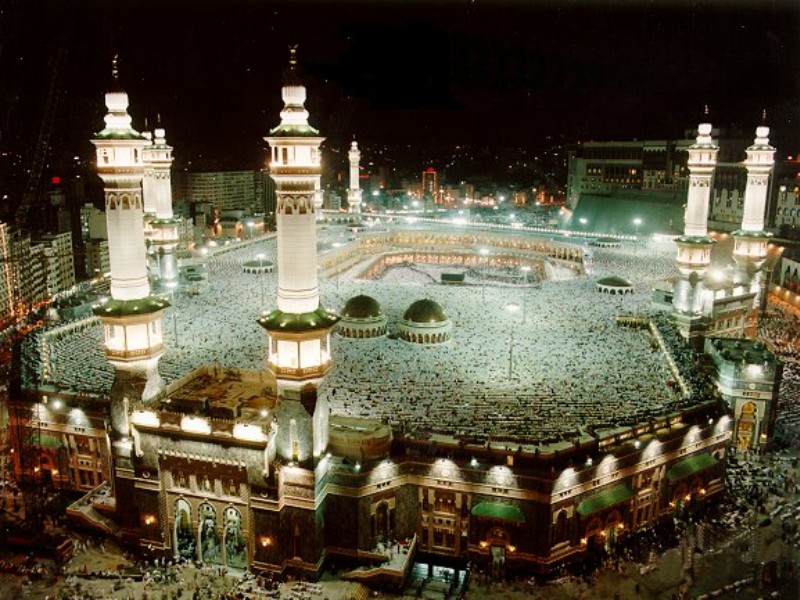
According to Islam, God created man for a noble purpose:
to worship Him and lead a virtuous life based on His teachings and guidance. How
would man know his role and the purpose of his existence unless he received
clear and practical instructions of what God wants him to do? Here comes the
need for prophethood. Thus God has chosen from every nation at least one
prophet to convey His Message to people.
One might ask, how were the prophets chosen and who were
entitled to this great honor?
Prophethood is God’s blessing and favor that He may
bestow on whom He wills. However, from surveying the various messengers
throughout history, three features of a prophet may be recognized:
1. He is the best in his community morally and
intellectually. This is necessary because a prophet’s life serves as a role
model for his followers. His personality should attract people to accept his
message rather than drive them away by his imperfect character. After
receiving the message, he is infallible. That is, he would not commit any sin.
He might make some minor mistakes, which are usually corrected by revelation.
2. He is supported by miracles to prove that he
is not an imposter. Those miracles are granted by the power and permission of
God and are usually in the field in which his people excel and are recognized
as superior. We might illustrate this by quoting the major miracles of the
three prophets of the major world religions, Judaism, Christianity and Islam.
Moses’ contemporaries were excellent in magic, so his
major miracle was to defeat the best magicians of Egypt of his day. Jesus’
contemporaries were recognized as skilled physicians, therefore, his miracles
were to raise the dead and cure incurable diseases. The Arabs, the
contemporaries of the Prophet Muhammad, may the mercy and blessings of God be
upon him, were known for their eloquence and magnificent poetry. So Prophet
Muhammad’s major miracle was the Quran, the equivalent of which the whole
legion of Arab poets and orators could not produce, despite the repeated
challenge from the Quran itself. Again, Muhammad’s miracle has something
special about it. All previous miracles were limited to its time and place;
that is, they were shown to specific people at a specific time. Not so with
the miracle of Prophet Muhammad the Quran. It is a universal and everlasting
miracle. Previous generations witnessed it and future generations will witness
its miraculous nature in terms of its style, content and spiritual uplifting. These
can still be tested and will thereby prove the divine origin of the Quran.
3. Every prophet states clearly that what he
receives is not of his own making, but from God, for the well-being of mankind.
He also confirms what was revealed before him and what may be revealed after
him. A prophet does this to show that he is simply conveying the message that
is entrusted to him by the One True God of all people in all ages. So the
message is one in essence and for the same purpose. Therefore, it should not
deviate from what was revealed before him or what might come after him.
Prophets are necessary for conveying God’s instructions
and guidance to mankind. We have no way of knowing why we were created. What
will happen to us after death? Is there any life after death? Are we
accountable for our actions? These and so many other questions about God,
angels, paradise, hell, and more, cannot be answered without direct revelation
from the Creator and Knower of the unseen. Those answers must be authentic and
must be brought by individuals whom we trust and respect. That is why
messengers are the elite of their societies in terms of moral conduct and
intellectual ability.
Hence, the slanderous Biblical stories about some of the
great prophets are not accepted by Muslims. For example, Lot is reported to
have committed incestuous fornication while drunk. David is alleged to have
sent one of his leaders to his death in order to marry his wife. Prophets, to
Muslims, are greater than what these stories indicate. These stories cannot be
true from the Islamic point of view.
The prophets are also miraculously supported by God and
instructed by Him to affirm the continuity of the message. The content of the
prophets’ message to mankind can be summarized as follows:
a) Clear concept of God: His attributes, His
creation, what should and should not be ascribed to Him.
b) Clear idea about the unseen world, the
angels, jinn (spirits), Paradise and Hell.
c) Why God has created us, what He wants from us
and what rewards and punishments are for obedience and disobedience.
d) How to run our societies according to His
will. That is, clear instructions and laws that, when applied correctly and
honestly, will result in a smoothly functioning, harmonious society.
It is clear from the above discussion that there is no
substitute for prophets. Even today with the advancement of science, the only
authentic source of information about the supernatural world is revelation. Guidance
can be obtained neither from science nor from mystic experience. The first is
too materialistic and limited; the second is too subjective and frequently
misleading.
The Basis of Islam
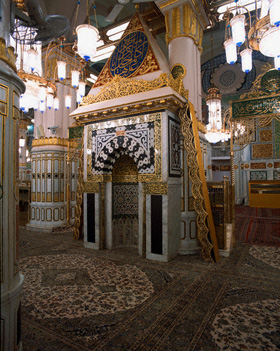 The basis
of the religion of Islam is the attestation to two phrases:
The basis
of the religion of Islam is the attestation to two phrases:
(i) None is rightfully worshipped except God (La
ilaaha ‘ill-Allah), and
(ii) Muhammad is the Messenger of God (Muhammad-ur-Rasool-ullah).
This phrase is known as the shahaadah, or
testimony of faith. Through the belief and attestation of these two phrases
one enters the fold of Islam. It is the motto of the believers which they
maintain throughout life, and the basis for all their beliefs, worship and
existence. This article will discuss the first part of this testimony.
The Importance of the Statement ‘Laa Ilaaha ill-Allah’
As mentioned earlier, this testimony is by far the most
important aspect of the religion of Islam, as it asserts the belief in Tawheed,
or the Oneness and uniqueness of God, upon which the whole religion is built. For
this reason, it is called, “The declaration of Tawheed”. This
uniqueness and oneness necessitates God’s sole right to worship and obedience.
The religion of Islam is basically a way of life in which a person worships and
obeys the orders of God and none else. It is the only true monotheistic
religion, stressing that no worship should be directed to any other except God.
For this reason, we see that in many narrations, the Prophet, may the mercy and
blessings of God be upon him, said that whoever says this phrase and practices
it will enter Paradise for eternity, and whoever opposes it will doomed to
Hellfire for eternity.
This declaration also reiterates the purpose of one’s
life, which is the worship of God alone, and obviously, the purpose of one’s
existence and being is the most important aspect in one’s life. God says in
the Quran:
“And I have not created neither jinn nor humans, except to
worship Me Alone.” (Quran 51:56)
The message of Tawheed found in this declaration is
not particular to Islam. Due to the importance, reality and truth of this
message, it was the message brought by all prophets. Since the dawn of
humanity, God sent messengers to every people and nation, commanding them to
worship Him Alone, and to reject all false deities. God says:
“And indeed We have raised amongst every nation a messenger, (commanding
them) ‘Worship God, and reject all false deities….” (Quran 16:36)
It is only when this notion of Tawheed is
ingrained in the heart and minds of a person that they will willingly follow
the commandments of God and render all worship to Him Alone. For this reason,
the Prophet called his people for thirteen years in Mecca to Tawheed
alone, and only a minimal amount of worship was mandated at that time. It was
only when this notion became firm in the believers’ hearts and they were
willing to sacrifice even their own lives for it that the majority of the other
commandments of Islam were revealed. If this base is missing, nothing after it
will be of avail.
The Meaning of Laa Ilaaha ill-Allah
La ilaaha ill-Allah, literally means “There is no
god (deity) except Allah”. Here, god with a small case ‘g’ is
anything which is worshipped. What this declaration implies is that although
there might be other gods and deities being worshipped by humans in existence,
none of them are rightfully worshipped, meaning that no object considered as a
god has any right to that worship, nor does it deserve it, except the One True God.
Thus, laa ilaaha ill-Allah means, “There is no god rightfully worshipped
except Allah.”
La ilaaha… (There is no god rightfully worshipped…)
These two words deny the right of any created being to
worship. Muslims reject the worship of everything besides God. This rejection
extends to all superstitions, ideologies, ways of life, or any authority
figures who claim divine devotion, love, or absolute obedience. God in the
Quran mentions in many places that all things which people take as objects of
worship besides Himself do not deserve any worship, nor do they have any right to
it, as they themselves are creations and have no power to bring any benefit.
“Yet they have taken besides Him other gods that created
nothing but are themselves created, and possess neither [the power to] harm nor
benefit for themselves, and possess no power [of causing] death, nor [of giving]
life, nor of raising the dead.” (Quran 25:3)
Some worship another object or being because they
believe that it has some special power, such as some control over the universe,
some power to benefit or harm, or that it deserves worship in and of itself due
to its greatness of being. God negates the notion that these things which
people take as objects of worship, whether they be aspects of nature, such as
the wind, trees, stones, wind; or conscious beings, such as humans, prophets,
saints, angels, kings, have any power in themselves. They are mere creations
like the worshippers themselves and have no power to help even their own
selves, and thus they are not to be worshipped. They are mere creations with
deficiencies, subject to the Will of God, and thus they do not deserve any
aspect of worship.
In reality, many believe in the ultimate control and
power of God, but they imagine the Divine Kingdom of God to be like earthly
kingdoms. Just as a king has many ministers and trusted associates, they
imagine ‘saints’ and minor deities to be our intercessors to God. They take them
as agents through whom God is approached, by directing some acts of worship and
service to them. God says:
“And verily, if you ask them: ‘Who created the heavens and the
earth?’
Surely, they will say: ‘God.’
Say: ‘Tell me then, the things that you invoke besides God, if
God intended some harm for me, could they remove His harm, or if He intended
some mercy for me, could they withhold His Mercy?’
Say : ‘Sufficient for me is God; in Him those who trust (i.e.
believers) must put their trust.’” (Quran 39:38)
In truth, there are no intercessors in Islam. No
righteous person is to be venerated, nor is any other being to be worshipped. A
Muslim directs all worship directly and exclusively to God.
…Ill-Allah (…Except Allah)
After denying the right of any created being to be
worshipped, the shahaadah affirms divinity for God alone, with ‘…except
God’. In many places in the Quran, after God negates that anything of the
creation has power to bring benefit and harm, thus deserving no worship, He
states that He Himself is to be worshipped, as He has control over and
ownership of the whole universe. It is God Alone who provides for his creation;
He is in total control. He is the only one who can bring benefit and harm, and
nothing can impede His Will from becoming reality. Thus it is He Himself,
through His perfection, through His ultimate powers, due to his total
ownership, and due to His greatness, who deserves all worship, service and
veneration exclusively.
“Say: ‘Who is the Lord of the heavens and the earth?’
Say: ‘(It is) God.’
Say: ‘Have you then taken (for worship) deities other than
Him, such as have no power either for benefit or for harm to themselves?’
Say: ‘Is the blind equal to the one who sees? Or darkness
equal to light? Or do they assign to God partners who created the like of His
creation, so that the creation [which they made and His creation] seemed alike
to them?’
Say: ‘God is the Creator of all things, He is the One, the
Irresistible.’” (Quran 13:16)
God also says:
“You worship besides God only idols, and you only invent
falsehood. Verily, those whom you worship besides God have no power to give
you provision. So seek your provision from God (Alone), and worship Him
(Alone), and be grateful to Him. To Him (Alone) you will be brought back.”
(Quran 29:17)
And God says:
“Is not He Who created the heavens and the earth and sends
down for you water (rain) from the sky, whereby We cause to grow wonderful
gardens full of beauty and delight? It is not in your ability to cause the
growth of their trees. Is there any ilaah (god) along with Allah? Nay,
but they are a people who ascribe equals (to Him)!” (Quran 27:60)
As God is the only being who is deserving of worship,
anything worshipped besides or along with Him is done so wrongfully. All acts
of devotion are to be directed towards God alone. All requirements should be
sought through Him. All fear of the unknown should be feared from Him, and all
hope should be placed in Him. All divine love should be felt for him, and all
that one hates should be hated for His sake. All deeds of good should be done
to seek His favor and pleasure, and all wrong should be avoided for his sake. In
these ways do Muslims worship God alone, and from this, we understand how the
whole religion of Islam is based upon this declaration of Tawheed.
Belief in Life after Death

Islamic doctrine holds that human existence continues
after the death of the human body in the form of spiritual and physical
resurrection. There is a direct relation between conduct on earth and the life
beyond. The afterlife will be one of rewards and punishments which is commensurate
with earthily conduct. A Day will come when God will resurrect and gather the
first and the last of His creation and judge everyone justly. People will
enter their final abode, Hell or Paradise. Faith in life after death urges us
to do right and to stay away from sin. In this life we sometimes see the pious
suffer and the impious enjoy. All shall be judged one day and justice will be
served.
Faith in life after death is one of the six fundamental
beliefs required of a Muslim to complete his faith. Rejecting it renders all
other beliefs meaningless. Think of a child who does not put his hand in fire.
He does not do so because he is sure it will burn. When it comes to doing
school work, the same child may feel lazy because he does not quite understand
what a sound education will do for his future. Now, think of a man who does
not believe in the Day of Judgment. Would he consider belief in God and a life
driven by his belief in God to be of any consequence? To him, neither
obedience to God is of use, nor is disobedience of any harm. How, then, can he
live a God-conscious life? What incentive would he have to suffer the trials of
life with patience and avoid overindulgence in worldly pleasures? And if a man
does not follow the way of God, then what use is his belief in God, if he has
any? The acceptance or rejection of life after death is perhaps the greatest factor
in determining the course of an individual’s life.
The dead have a continued and conscious existence of a
kind in the grave. Muslims believe that, upon dieing, a person enters an intermediate
phase of life between death and resurrection. Many events take place in this
new “world”, such as the “trial” of the grave, where everyone will be
questioned by angels about their religion, prophet, and Lord. The grave is a
garden of paradise or a pit of hell; angels of mercy visit the souls of
believers and angels of punishment come for the unbelievers.
Resurrection will be preceded by the end of the world. God
will command a magnificent angel to blow the Horn. At its first blowing, all
the inhabitants of the heavens and the earth will fall unconscious, except
those spared by God. The earth will be flattened, the mountains turned into
dust, the sky will crack, planets will be dispersed, and the graves overturned.
People will be resurrected into their original physical bodies
from their graves, thereby entering the third and final phase of life. The Horn
will blow again upon which people will rise up from their graves, resurrected!
God will gather all humans, believers and the impious,
jinns, demons, even wild animals. It will be a universal gathering. The
angels will drive all human beings naked, uncircumcised, and bare-footed to the
Great Plain of Gathering. People will stand in wait for judgment and humanity
will sweat in agony. The righteous will be sheltered under the shade of God’s
Magnificent Throne.
When the condition becomes unbearable, people will
request the prophets and the messengers to intercede with God on their behalf
to save them from distress.
The balances will be set and the deeds of men will be weighed.
Disclosure of the Records of the deeds performed in this life will follow. The
one who will receive his record in his right hand will have an easy reckoning.
He will happily return to his family. However, the person who will receive his
record in his left hand would wish he were dead as he will be thrown into the
Fire. He will be full of regrets and will wish that he were not handed his
Record or he had not known it.
Then God will judge His creation. They will be reminded
and informed of their good deeds and sins. The faithful will acknowledge their
failings and be forgiven. The disbelievers will have no good deeds to declare
because an unbeliever is rewarded for them in this life. Some scholars are of
the opinion that the punishment of an unbeliever may be reduced in lieu of his
good deeds, except the punishment of the great sin of disbelief.
The Siraat is a bridge that will be established
over Hell extending to Paradise. Anyone who is steadfast on God’s religion in
this life will find it easy to pass it.
Paradise and Hell will be the final dwelling places for
the faithful and the damned after the Last Judgment. They are real and eternal.
The bliss of the people of Paradise shall never end and the punishment of
unbelievers condemned to Hell shall never cease. Unlike a pass-fail system in
some other belief-systems, the Islamic view is more sophisticated and conveys a
higher level of divine justice. This can be seen in two ways. First, some
believers may suffer in Hell for unrepented, cardinal sins. Second, both Paradise and Hell have levels.
Paradise is the eternal garden of physical pleasures and
spiritual delights. Suffering will be absent and bodily desires will be
satisfied. All wishes will be met. Palaces, servants, riches, streams of wine,
milk and honey, pleasant fragrances, soothing voices, pure partners for
intimacy; a person will never get bored or have enough!
The greatest bliss, though, will be the vision of their
Lord of which the unbelievers will be deprived.
Hell is an infernal place of punishment for unbelievers
and purification for sinful believers. Torture and punishment: for the body
and the soul: burning by fire, boiling water to drink, scalding food to eat,
chains, and choking columns of fire. Unbelievers will be eternally damned to
it, whereas sinful believers will eventually be taken out of Hell and enter
Paradise.
Paradise is for those who worshipped God alone, believed
and followed their prophet, and lived moral lives according to the teachings of
scripture.
Hell will be the final dwelling place of those who denied
God, worshipped other beings besides God, rejected the call of the prophets,
and lead sinful, unrepentant lives.
Belief in the Prophets
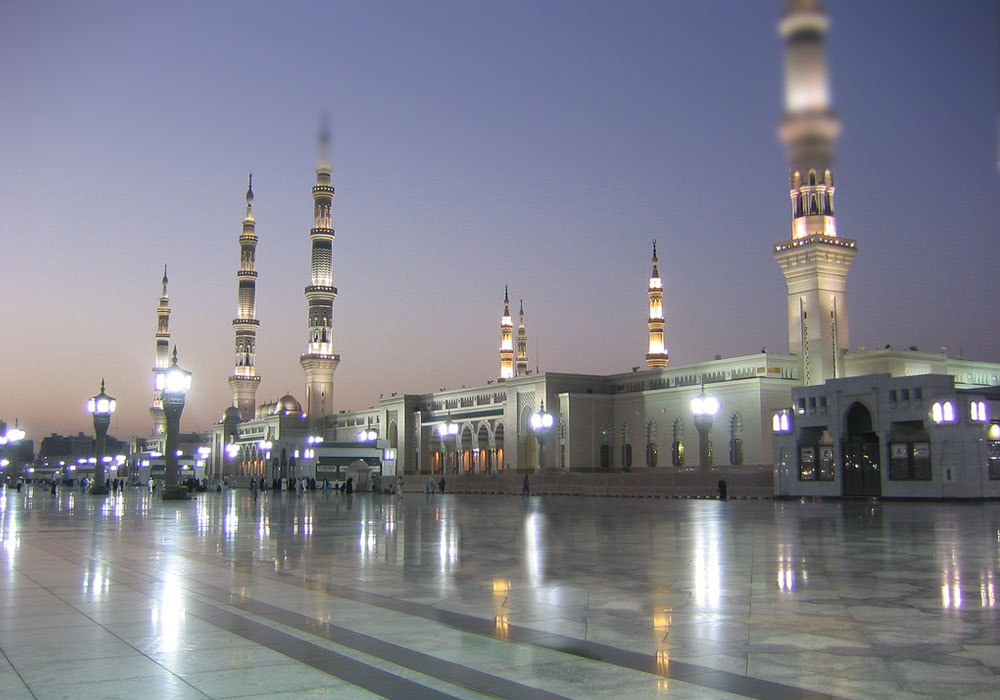
“The Prophet (Muhammad) believes in what has been sent down to
him from his Lord, and (so do) the believers. Each one believes in God, His
Angels, His Books, and His prophets. (They say,) ‘We make no distinction
between one another of His prophets...’” (Quran 2:285)
God conveys His message and relates His will through human
prophets. They form a link between the earthly beings and the heavens, in the
sense that God has picked them to deliver His message to human beings. There
are no other channels to receive divine communications. It is the system of
communication between the Creator and the created. God does not send angels to
every single individual, nor does He open the skies so people can climb up to
receive the message. His way of communication is through human prophets who
receive the message through angels.
To have faith in the prophets (or messengers) is to
firmly believe that God chose morally upright men to bear His message and pass
it to humanity. Blessed were those who followed them, and wretched were those
who refused to obey. They faithfully delivered the message, without hiding,
altering, or corrupting it. Rejecting a prophet is rejecting the One who sent
him, and disobeying a prophet is disobeying the One who commanded to obey him.
God sent to every nation a prophet, mostly from amongst
them, to call them to worship God alone and to shun false gods.
“And ask (O Muhammad) those of Our prophets whom We sent
before you: ‘Did We ever appoint gods to be worshipped besides the Most
Merciful (God)?’” (Quran 43:45)
Muslims believe in those prophets mentioned by name in
Islamic sources, such as Adam, Noah, Abraham, Isaac, Ishmael, David, Solomon,
Moses, Jesus, and Muhammad, may the mercy and blessings of God be upon him, to
name a few. A general belief is held in those not mentioned by name, as God
says:
“And, indeed We have sent prophets before you (O Muhammad), of
some of them We have related to you their story, and of some We have not
related to you their story...” (Quran 40:78)
Muslims firmly believe the final prophet was the Prophet
of Islam, Muhammad, and there will be no prophet or messenger after him.
To appreciate this fact, one must understand that the
teachings of the last prophet are preserved in original language in their primary
sources. There is no need for another prophet. In the case of earlier
prophets, their scriptures were lost or their message was corrupted to the
point that truth was hardly distinguishable from falsehood. The message of the
Prophet Muhammad is clear and preserved and will remain so till the end of time.
The Purpose for Sending Prophets
We can identify the following main reasons for sending prophets:
(1) Guiding humanity from the worship of created
beings to the worship of their Creator, from being in a state of servitude to
the creation to the freedom of worshipping their Lord.
(2) Clarifying to humanity the purpose of creation:
worshipping God and obeying His commands, as well as clarifying that this life is
a test for each individual, a test of which its results will decide the type of
life one will lead after death; a life of eternal misery or eternal bliss. There
is no other definite way to find the true purpose of creation.
(3) Showing humanity the right path that will lead
them to Paradise and to salvation from Hellfire.
(4) Establishing proof against humanity by sending
prophets, so people will not have an excuse when they will be questioned on the
Day of Judgment. They will not be able to claim ignorance to the purpose of
their creation and life after death.
(5) Uncovering the unseen ‘world’ which exists beyond
the normal senses and the physical universe, such as the knowledge of God,
existence of angels, and the reality of the Day of Judgment.
(6) Providing human beings practical examples to
lead moral, righteous, purpose-driven lives free of doubts and confusion. Innately,
human beings admire fellow human beings, so the best examples of righteousness
for humans to imitate are those of God’s prophets.
(7) Purifying the soul from materialism, sin, and
heedlessness.
(8) Conveying to humanity the teachings of God,
which is for their own benefit in this life and in the Hereafter.
Their Message
The single most important message of all prophets to
their people was to worship God alone and none else and to follow His teachings.
All of them, Noah, Abraham, Isaac, Ishmael, Moses, Aaron, David, Solomon,
Jesus, Muhammad and others, in addition to those we do not know - invited
people to worship God and shun false gods.
Moses declared: “Hear, O Israel The Lord our God is one
Lord.” (Deuteronomy 6:4).
This was repeated 1500 years later by Jesus, when he
said: “The first of all the commandments is, ‘Hear, O Israel; the Lord our God
is one Lord.’” (Mark 12:29).
Finally, the call of Muhammad some 600 years later
reverberated across the hills of Mecca:
“And your God is One God: there is no god but He...” (Quran 2:163)
The Holy Quran states this fact clearly:
“And We did not send any Messenger before you (O Muhammad) but
We revealed to him (saying): ‘none has the right to be worshipped but I, so
worship Me.’” (Quran 21:25)
The Message Bearers
God chose the best among humanity to deliver His message.
Prophethood is not earned or acquired like higher education. God chooses whom
He pleases for this purpose.
They were the best in morals and they were mentally and
physically fit, protected by God from falling into cardinal, major sins. They
did not err or commit mistakes in delivering the message. They were over one
hundred thousand prophets sent to all mankind, to all nations and races, in all
corners of the world. Some prophets were superior to others. The best among
them were Noah, Abraham, Moses, Jesus, and Muhammad, may the mercy and
blessings of God be upon him.
People went to extremes with the prophets. They were rejected
and accused of being sorcerers, madmen, and liars. Others turned them into
gods by giving them divine powers, or declared them to be His children, like
what happened to Jesus.
In truth, they were fully human with no divine
attributes or power. They were God’s worshipping slaves. They ate, drank,
slept, and lived normal human lives. They did not have the power to make
anyone accept their message or to forgive sins. Their knowledge of future was
limited to what God revealed to them. They had no part in running the affairs
of the universe.
Out of the Infinite Mercy and Love of God, He sent to
humanity prophets, guiding them to that which is the best. He sent them as an
example for humanity to follow, and if one does follow their example, they
would live a life in accordance to the Will of God, earning His Love and
Pleasure
Belief in Scriptures

We can identify four main reasons for the revelation of
scriptures:
(1) The scripture revealed to a prophet is a point
of reference to learn the religion and obligations towards God and fellow human
beings. God reveals Himself and explains the purpose of human creation through
revealed scriptures.
(2) By referring to it, 'disputes and differences
between its followers in matter of religious belief and practice or in matters
of social practice could be settled.
(3) The scriptures are meant to keep the religion
safe from corruption and deterioration, at least for some time after the death
of the prophet. At the present time, the Quran revealed to our Prophet Muhammad,
may the mercy and blessings of God be upon him, is the only scripture to remain
safe from corruption.
(4) It is God’s proof against human beings. They
are not allowed to oppose or overstep it.
A Muslim firmly believes that divinely revealed books were
actually revealed by the Compassionate God to His prophets to guide mankind. The
Quran is not the only spoken Word of God, but God also spoke to prophets before
Prophet Muhammad.
“…and to Moses God spoke directly.” (Quran 4:164)
God describes true believers are those who:
“…believe in what has been sent down to you (Muhammad) and
what has been sent down before you…” (Quran 2:4)
The most important and central message of all scriptures
was to worship God and God alone.
“And we sent never a prophet before you except that we
revealed to him, saying, ‘there is no God but I, so worship Me.’” (Quran 21:25)
Islam is more inclusive in the holy revelations it
affirms than any other heavenly religion in its present form.
Muslims uphold and respect the following scriptures:
(i) The Quran itself, revealed to the Prophet
Muhammad.
(ii) The Torah (Tawrah in Arabic) revealed
to the Prophet Moses (different from the Old Testament read today).
(iii) The Gospel (Injeel in Arabic) revealed
to Prophet Jesus (different from the New Testament read in churches today).
(iv) The Psalms (Zaboor in Arabic) of David.
(v) The Scrolls (Suhuf in Arabic) of Moses
and Abraham.
Third, Muslims believe whatever is true in them and has neither
been altered or deliberately misconstrued.
Fourth, Islam affirms that God revealed the Quran as a witness
over the previous scriptures and confirmation of them, because He says therein:
“And We have sent down to you (O Muhammad) the Book (the Quran)
in truth, confirming the scripture that came before it and trustworthy in
highness and a witness over it (the collection of old scriptures)…” (Quran 5:48)
Meaning the Quran confirms whatever is true in previous
scriptures and rejects whatever alterations and changes human hands have made to
them.
Original Scriptures and the Bible
We must distinguish between two matters: the original
Torah, Gospel, and Psalms and the present day Bible. The originals
were God’s revelation, but the present day Bible does not have
the exact original scripture.
No divine scripture exists today in the original
language it was revealed in, except the Quran. The Bible was not revealed in
English. Different books of today’s Bible are at best tertiary translations
and different versions exist. These multiple translations were done by people
whose knowledge, skill, or honesty is not known. As a result, some bibles are
larger than others and have contradictions and internal inconsistencies! No
originals exist. The Quran, on the other hand, is the only scripture in
existence today in its original language and words. Not one letter of the
Quran has been changed since its revelation. It is internally consistent with
no contradictions. It is today as it was revealed 1400 years ago, transmitted
by a rock-solid tradition of memorization and writing. Unlike other sacred
texts, the entire Quran has been memorized by almost every Islamic scholar and
hundreds of thousands of ordinary Muslims, generation after generation!
The previous scriptures essentially consist of:
(i) Stories of man’s creation and earlier
nations, prophesies of what was to come like signs before the Judgment Day,
appearance of new prophets, and other news.
The stories, prophecies,
and news in the Bible read in churches and synagogues today are partly true and
partly false. These books consist of some translated fragments of the original
scripture revealed by God, words of some prophets, mixed with explanations of
scholars, errors of scribes, and outright malicious insertions and deletions. Quran,
the final and trustworthy scripture, helps us sort out fact from fiction. For
a Muslim, it is the criterion to judge the truth from the falsehood in these
stories. For example, the Bible still contains some clear passages pointing to
God’s unity. Also, some
prophecies regarding the Prophet Muhammad are found in the Bible as well.
Yet, there are passages, even whole books, almost entirely recognized to be
forgeries and the handiwork of men
(ii) Law and rulings, the allowed and prohibited,
like the Law of Moses.
If we were to assume
the law, that is the lawful and the prohibited, contained in the previous books
did not suffer corruption, the Quran still abrogates those rulings, it cancels
the old law which was suitable for its time and is no longer applicable today.
For example, the old laws pertaining to diet, ritual prayer, fasting,
inheritance, marriage and divorce have been cancelled (or, in many cases, reaffirmed)
by the Islamic Law.
The Holy Quran
The Quran is different from other scriptures in the
following respects:
(1) The Quran is miraculous and inimitable. Nothing
similar to it can be produced by human beings.
(2) After the Quran, no more scriptures will be
revealed by God. Just as the Prophet Muhammad is the last prophet, the Quran
is the last scripture.
(3) God has taken it upon Himself to protect the Quran
from alteration, to safeguard it from corruption, and to preserve it from
distortion. On the other hand, previous scriptures suffered alteration and
distortion and do not remain in their originally revealed form.
(4) The Quran, for one, confirms early scriptures
and, for another, is a trustworthy witness over them.
(5) The Quran abrogates them, meaning it cancels
the rulings of the previous scriptures and renders them inapplicable. The
Law of the old scriptures is no longer applicable; the previous rulings have
been abrogated with the new Law of Islam.
Belief in Angels
Reality of Angels


They are not divine or semi-divine, and they are not
God’s associates running different districts of the universe. Also, they are
not objects to be worshipped or prayed to, as they do not deliver our prayers
to God. They all submit to God and carry
out His commands.
In the Islamic worldview, there are no fallen angels: they
are not divided into ‘good’ and ‘evil’ angels. Human beings do not become
angels after death. Satan is not a fallen angel, but is one of the jinn,
a creation of God parallel to human beings and angels.
Angels were created from light before human beings were
created, and thus their graphic or symbolic representation in Islamic art is
rare. Nevertheless, they are generally beautiful beings with wings as
described in Muslim scripture.
Angels form different cosmic hierarchies and orders in
the sense that they are of different size, status, and merit.
The greatest of them is Gabriel. The Prophet of Islam actually
saw him in his original form. Also, the attendants of God’s Throne are among
the greatest angels. They love the believers and beseech God to forgive them
their sins. They carry the Throne of God, about whom the Prophet Muhammad, may
the mercy and blessings of God be upon him, said:
“I have been given permission to speak about one of
the angels of God who carry the Throne. The distance between his ear-lobes and
his shoulders is equivalent to a seven-hundred-year journey.” (Abu Daud)
They do not eat or drink. The angels do not get bored
or tired of worshipping God:
“They celebrate His praises night and day, nor do they ever
slacken.” (Quran 21:20)
The Number of Angels
How many angels there are? Only God knows. The
Much-Frequented House is a sacred heavenly sanctuary above the Kaaba, the black
cube in the city of Mecca. Every day seventy thousand angels visit it and
leave, never returning to it again, followed by another group.[1]
The Names of Angels
Muslims believe in specific angels mentioned in the
Islamic sources like Jibreel (Gabriel), Mika'eel (Michael), Israfeel,
Malik - the guard over Hell, and others. Of these, only Gabriel and
Michael are mentioned in the Bible.
Angelic Abilities
The angels possess great powers given to them by God. They
can take on different forms. The Muslim scripture describes how at the moment
of Jesus’ conception, God sent Gabriel to Mary in the form of a man:
“…Then We sent to her Our angel, and he appeared before her as
a man in all respects.” (Quran 19:17)
Angels also visited Abraham in human form. Similarly,
angels came to Lot to deliver him from danger in the form of handsome, young
men. Gabriel used to visit Prophet Muhammad in different forms. Sometimes, he
would appear in the form of one of his handsome disciples, and sometimes in the
form of a desert Bedouin.
Angels have the ability to take human forms in some
circumstances involving common people.
Gabriel is God’s heavenly messenger to mankind. He
would convey the revelation from God to His human messengers. God says:
“Say: whoever is an enemy to Gabriel - for he brings down the
(revelation) to your heart by God’s will...” (Quran 2:97)
Tasks of the Angels
Some angels are put in charge of executing God’s law in
the physical world. Michael is responsible for rain, directing it wherever God
wishes. He has helpers who assist him by the command of his Lord; they direct
the winds and clouds, as God wills. Another is responsible for blowing the Horn,
which will be blown by Israafeel at the onset of the Day of Judgment. Others
are responsible for taking souls out of the bodies at the time of death: the
Angel of Death and his assistants. God says:
“Say: the Angel of Death, put in charge of you, will (duly)
take your souls, then shall you be brought back to your Lord.” (Quran 32:11)
Then there are guardian angels responsible for
protecting the believer throughout his life, at home or traveling, asleep or
awake.
Others are responsible for recording the deeds of man,
good and bad. These are known as the “honorable scribes.”
Two angels, Munkar and Nakeer, are
responsible for testing people in the grave.
Among them are keepers of Paradise and the nineteen
‘guards’ of Hell whose leader is named ‘Malik.’
There are also angels responsible for breathing the soul
into the fetus and writing down its provisions, life-span, actions, and whether
it will be wretched or happy.
Some angels are roamers, traveling around the world in
search of gatherings where God is remembered. There are also angels
constituting God’s heavenly army, standing in rows, they never get tired or sit
down, and others who bow or prostrate, and never raise their heads, always
worshipping God.
As we learn from above, the angels are a grandiose
creation of God, varying in numbers, roles, and abilities. God is in no need of
these creatures, but having knowledge and belief in them adds to the awe that
one feels towards God, in that He is able to create as He wishes, for indeed
the magnificence of His creation is a proof of the magnificence of the Creator.
Subscribe to:
Posts (Atom)